Social Psychology
-The study of how we think about, influence and relate to one another
Social Thinking
- Social Thinking: how we think of one another
- Attribution Theory: the idea that we give a casual explanation for someone's behavior, we credit that behavior either to the situation or the person's disposition
- Fundamental Attribution Error: the tendency to underestimate the impact of a situation and overestimate the impact of a situation and overestimate the impact of personal disposition
- Attitudes: a belief of feeling that predisposes one to respond in a particular way to something
- Foot-in-the-door Phenomenon: the tendency for people who have first agreed to a small request to comply later with a larger request
- Door-in-face Phenomenon: the tendency for people who say no to a huge request, to comply with a smaller one
- Cognitive Dissonance Theory: we do not like when we have either conflicting attitudes or when will our attitudes do not match our actions
-When they clash, we will change our attitude to create balance
Social Influence
- Conformity: adjusting one's behavior or thinking to coincide with a group standard
- Asch's Study
- Conditions that strengthen conformity:
- One is made to feel incompetent
- The group is at least three people
- The group is unanimous
- One admires the groups' status
- One had made no prior commitment
- The person is observed
- Reasons for Conforming:
-Normative Social Influence: influence resulting from a person's desire to gain approval or avoid disappointment
-Informational Social Influence: influence resulting from one's willingness to accept others' opinions about reality
- Obedience: Milgram's experiment measures the willingness of study participants to obey an authority figure who instructed them to perform acts conflicting with their persona conscience
- Social Facilitation:
-Improved performance of tasks in the presence of others
-Occurs with simple or well learned tasks
-Not with tasks that are difficult or no yet mastered
- Social Loafing: the tendency for people in a group to exert less effort when pooling efforts toward a common goal than if they were individually accountable
- Deindividuation: the loss of self-awareness and self-restraint occurring in group situations that foster arousal and anonymity
- Group Polarization: the concept that a group's attitude is one of extremes and rarely moderate
- Groupthink: the mode of thinking that occurs when the desire for harmony in a decision-making group overrides common sense
- Self-Fulfilling Prophecies: occurs when one person's belief about others leads one to act in ways that induce the others to appear to confirm the beliefs
Social Relations
- Prejudice: an unjustifiable attitude towards a group of people, usually stereotyped beliefs (a generalized belief about a group of people)
- Social Inequalities:
-Ingroup: "us"- people with whom one shares a common identity
-Outgroup: "them" - those perceived as different than one's ingroup
-Ingroup bias: the tendency to favor one's own group
- Scapegoat Theory: the theory that prejudice provides an outlet for anger by providing someone to blame
- Aggression: any physical or verbal behavior intended to hurt or destroy
- The Psychology of Aggression:
Frustration-Aggressive Principle
- The blocking of an attempt to achieve some goal
- Creates anger which generates aggression
- Goals can be: sports/work, relationships
- Conflict: a perceived incompatibility of actions, goals, or ideas
-Social trap or prisoner's dilemma
- The Just World Phenomenon: the belief that those who suffer deserve their fate
- Reciprocity Norm: expectation that people will help those that will help them
- Social Responsibility: the expectation that people help those that depend on them
- 5 Factors of Attraction:
1. Proximity: geographic nearness
- Mere Exposure Effect: repeated exposure to something breeds liking, mirror image concept
2. Reciprocal Liking: you are more likely to like someone who likes you
3. Similarity: opposites do not attract, similarity breeds concept
4. Physical Attractiveness
5. Love
- Passionate Love: an aroused state of intense positive absorption of another
- Compassionate Love: the deep affectionate attachment we feel for those with whom our lives are intertwined
- Equity: both are fair
- Self-Disclosure: no secrets
- Altruism: unselfish regard for the welfare of others
- Bystander Effect: only help others when others are around
- Social Exchange Theory: the idea that our social behavior is an exchange process, which we maximize benefits and minimize costs
- Peacemaking: give people super ordinate (shared) goals that can only be achieved through cooperation, win win situation through mediation, GRIT (Graduated and Reciprocated Initiatives in Tension Reduction)
Motivation and Emotion
- Motivation: a need or desire that energizes and directs behavior
- Instinct Theory: we are motivated by our inborn automated behavior, but instincts only explain why we do a small fraction of our behaviors
- Drive-Reduction Theory: the idea that a physiological need creates an aroused tension state (a drive) that motivates an organism to satisfy the need
-The need is usually to maintain homeostasis
-We are not only pushed by our needs but pulled by our incentives: a positive or negative environmental stimulus that motivates behavior
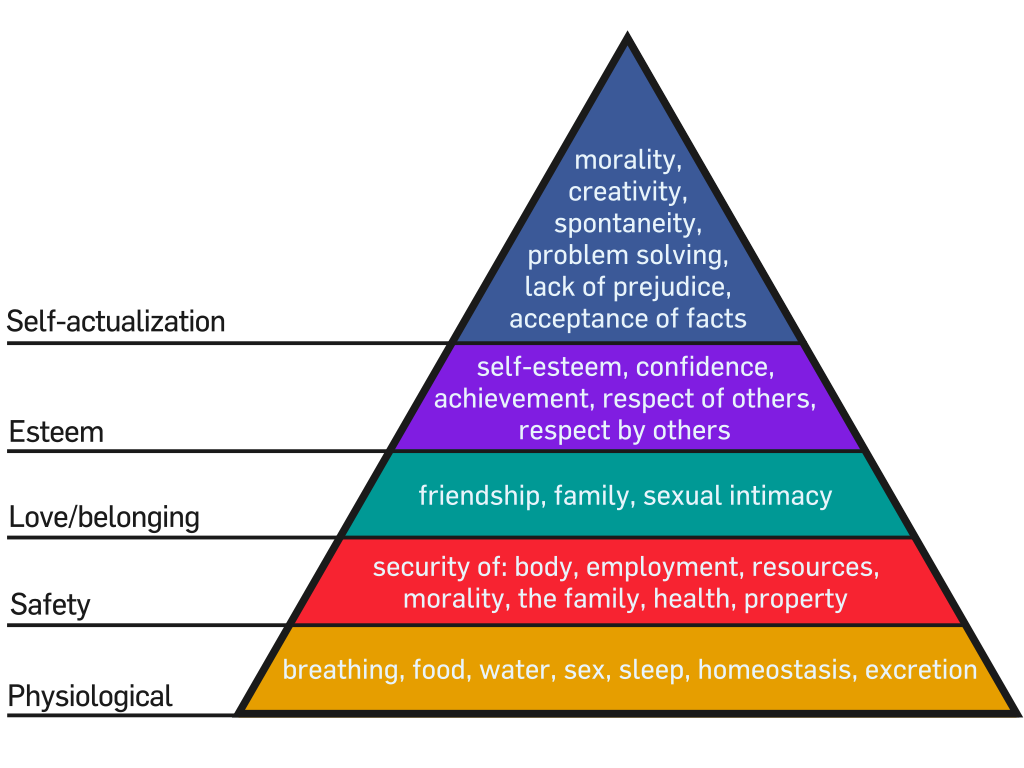
Maslow's Hierarchy of Needs
- Maslow said we are motivated by needs, and all needs are not created equal, we are driven to satisfy the lower level needs first.
Hunger
- Hunger: both physiological ad psychological
- Biological Basis of Hunger
-Hunger does not come from our stomach
-Comes from the brain: the hypothalamus
- Hypothalamus
1. Lateral Hypothalamus
-When stimulated it makes you hungry
-When lesioned (destroyed) you will never be hungry again
2. Ventromedial Hypothalamus
-When stimulated you feel full
-When lesioned you will never feel full again
- Two Theories
- Leptin: is a protein produced by bloated fat cells
- Set Point:
- Hypothalamus acts like a thermostat
- We are meant to be in a certain weight rage
- When we fall below weight our body will increase hunger and decrease energy expenditure (Basic Metabolic Rate)
- Body Chemistry
-Glucose: the hormone insulin converts glucose to fat, when glucose levels drop-hunger increases
- Hypothalamus and Hormones
-The hypothalamus monitors a number of hormones that are related to hunger
- The Psychology of Hunger
-External: people whose eating is triggered more by the presence of food than internal factors
- Eating Disorder
-Bulimia Nervosa: characterized by binging (eating large amounts of food) and purging (getting rid of food)
-Anorexia Nervosa: starve themselves to below 85% of their normal body weight, see themselves as fat, majority are woman
Learn more about bulima nervosa and what it does to people:
Achievement Motivation
- Intrinsic Motivator: rewards we get internally, such as enjoyment or satisfaction
- Extrinsic Motivator: reward tat we get for accomplishments from outside ourselves
- Management Theory:
- Theory X: managers believe that employees will work only if rewarded with benefits or threatened with punishment, think employees are extrinsically motivated, only interested in Maslow's lower needs
- Theory Y: managers believe that employees are internally motivated to good work and policies should encourage this internal motive, interested in Maslow's higher needs
Theory of Emotions
1. James-Lange Theory: experience of emotion is awareness of physiological responses to emotion-arousing stimuli

- Emotion: we feel emotion because of biological changes caused by stress, the bod changes and our mind recognizes the feeling
2. Cannon-Bard Theory: emotion-arousing stimuli simultaneously trigger

- Physiological responses
- Subjective experience of emotion
3. Schachter's Two-Factor Theory: to experience emotion one must
- Be physically aroused
- Cognitively label the arousal
Polygraph Lie Detectors
- Machinery commonly used in attempts to detect lies
- Measures several of the physiological responses accompanying emotion
- Perspiration
- Cardiovascular
- Breathing changes
Experienced Emotion
- Catharsis
-Emotional release
-Catharsis hypothesis
-"Releasing" aggressive energy (through action or fantasy) relieve aggressive urges
- Feel-good, Do-good Phenomenon: tendency to form judgments relative to "neutral" level
-Brightness of lights, volume of sound, level of income
-Defined by our prior experience
- Relative Deprivation: perception that one is worse of relative to those with whom one compares oneself
